Customizable: It may be personalized to swimsuit particular requirements such as the lifting height, span, and load capacity. Our bending beam load cells carry recognised Weights and Measures approval from OIML as well as Model approval from Legal Metrology Department, Government of India. This led to the construction of the Model B, which had the issue that the magnets were not properly mounted and tended to move round once they have been powered to their most capacity of 50,000 gauss. Over the subsequent few months, Spitzer produced a sequence of experiences outlining the conceptual foundation for the stellarator, in addition to potential problems. While getting ready for a ski trip to Aspen, Lyman Spitzer obtained a phone call from his father, who talked about an article on Huemul in The brand new York Times. This article highlights frequent pressure gauge cell faults and gives a step-by-step information for tips on how to troubleshoot them. This low profile compression load cell affords nice flexibility and reliability for a wide range of functions like Weighbridge, Silos, Tanks, Hoppes, Vessels Weighing with highly aggressive pricing. Rice Lake's diverse industrial bench scale choice presents a product for nearly any conceivable capacity or requirement.
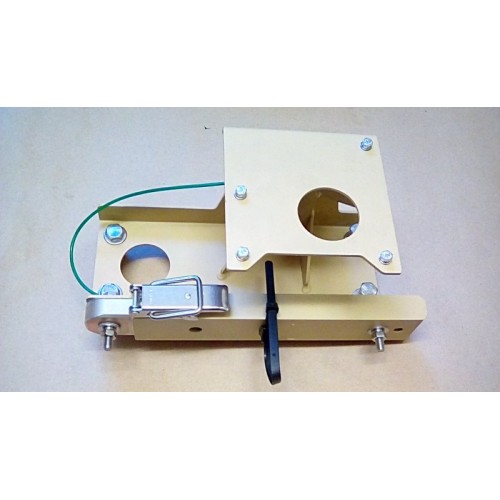 Engine Thrust Measurement: This built-to-order combination torque and thrust reactionary and rotary load cell product is constructed in all stainless steel for long-time period reliability. The PW6D single point load cell is subsequently preferrred for utilization in fast weighing processes in industrial applications. This versatile, low-profile load cell is right for tank, hopper, and vessel weighing. If the load cell will be used in purposes that have to be achieved in harsh environments, safety for the load cell will have to be thought-about to ensure dependable, long lasting efficiency. 4. Product Testing: Manufacturers use DSM Series load cells to conduct product testing, including sturdiness checks, load checks, and efficiency evaluations of varied merchandise and parts. 6. Product Development: Engineers and researchers use SSM Series load cells during product growth and prototyping to guage the efficiency, durability, and structural integrity of recent designs and parts. 3. Construction and Civil Engineering: In the construction and civil engineering industries, LWO Series load cells are used to evaluate the integrity of anchor bolts, foundation bolts, and different vital connections. Load cells are usually not always a one-dimension-fits-all answer. Strain gauge load cells are the sort most often found in industrial settings.
Temperature: Temperature variations can cause changes within the load cell’s material properties, resulting in fluctuations in the electrical resistance of the pressure gauge. Most consist of a strain gauge on a Wheatstone circuit bridge. Once the bridge circuit is arrange, it's excited with stabilized voltage, referred to as excitation voltage. Two sections had been initially set up, S Section working on the stellarator beneath Spitzer, and B Section working on bomb design below Wheeler. But by the time of his journey to Aspen, Spitzer had misplaced interest in bomb design, and upon his return, he turned his consideration full-time to fusion as a power source. While working at Los Alamos in 1950, John Wheeler recommended organising a secret analysis lab at Princeton University that may carry on theoretical work on H-bombs after he returned to the university in 1951. Spitzer was invited to hitch this program, given his earlier analysis in interstellar plasmas.
But the concept caught with him, and he began contemplating systems that will work. The machine began operations in early 1953 and clearly demonstrated improved confinement over the easy torus. A second design also failed for a similar purpose, but this machine demonstrated several-hundred-kilovolt X-rays that prompt good confinement. This was just like the B-1 machine however used pulsed energy to permit it to reach larger magnetic power and included a second heating system known as magnetic pumping. With this work in hand, Spitzer began to lobby the United States Atomic Energy Commission (AEC) for funding to develop the system. The final of the B-sequence machines was the B-66, accomplished in 1958, which was primarily a mix of the racetrack format from B-65 with the larger measurement and power of the B-3. This machine included a divertor, which removed impurities from the plasma, vastly reducing the x-ray cooling impact seen on earlier machines. Unfortunately, all of these bigger machines demonstrated an issue that came to be often called "pump out".
Comments
Post a Comment